Unlock the philosophy behind winning at the casino
The Psychology of Risk and Reward
Understanding the fundamental psychological drivers behind casino games is crucial. At its core, casino gambling is a dance between perceived risk and the allure of reward. Players are drawn to the potential for significant payouts, often overlooking the statistical probabilities that favor the house. This inherent human inclination towards optimism, coupled with the thrill of uncertainty, forms the bedrock of casino engagement. Recognizing this psychological landscape is the first step in developing a more strategic approach, and for those seeking a different kind of gaming experience, exploring options like captain marlin casino can offer a unique perspective on online entertainment.
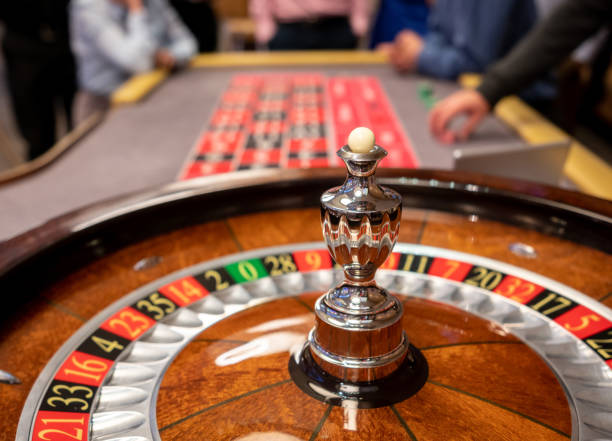
The philosophy of winning at the casino isn’t about guaranteed outcomes but about managing expectations and understanding emotional responses. A winning player, in a philosophical sense, is one who can detach their emotional state from the purely mathematical reality of the game. This involves cultivating discipline to stick to a predetermined strategy, even during periods of perceived bad luck, and knowing when to walk away when objectives are met or losses become unsustainable. The emotional resilience required is as important as any betting system.
Strategic Thinking vs. Pure Chance
While many casino games are heavily reliant on chance, a philosophical approach acknowledges that strategy can indeed play a role, particularly in games with player decisions. For instance, in blackjack, understanding basic strategy can significantly alter the odds in your favor over the long run. This isn’t about beating the inherent randomness, but about making the statistically optimal choice at each juncture to minimize losses and maximize potential gains when luck does swing your way. This highlights a key philosophical distinction: optimizing your play within the constraints of chance.
The philosophy of applying strategy also extends to bankroll management, a cornerstone of sustainable casino play. This involves setting strict limits on how much you are willing to bet and lose, and how much you aim to win before ceasing play. A disciplined approach to managing your capital prevents emotional decisions driven by desperation or greed, ensuring that you can continue to play and potentially benefit from favorable odds. The philosophy here is one of long-term viability and controlled engagement rather than impulsive, potentially ruinous wagers.
The Role of Observation and Adaptation
A deeper philosophical understanding of casino winning involves keen observation and the ability to adapt. This doesn’t imply looking for patterns in purely random events, which is a fallacy. Instead, it refers to observing the game’s flow, your own performance, and the general environment. For example, understanding the payout structures of different slot machines or the tendencies of other players at a poker table can provide subtle advantages. Adaptation then comes in adjusting your betting patterns or game choices based on these observations and your evolving understanding of the casino’s offerings.
This adaptive philosophy emphasizes that winning is not a static pursuit but a dynamic process. The casino environment is constantly in motion, with game rules, payouts, and even the behavior of machines and people subject to change. A philosophical winner embraces this fluidity, remaining open to learning and modifying their approach. It’s about continuous improvement and a willingness to experiment within the bounds of responsible play, always seeking to refine one’s interaction with the casino’s offerings.
Understanding House Edge and Probabilities
At the heart of any casino’s operation lies the house edge, a statistically calculated advantage designed to ensure profitability over time. A philosophically informed player must fully grasp this concept. It means that, on average, for every bet placed, the casino is expected to retain a small percentage. Understanding this fundamental probability dictates that no strategy can truly overcome the long-term mathematical advantage of the house in games of pure chance. This knowledge fosters realistic expectations and a focus on maximizing short-term wins rather than chasing elusive long-term guarantees.
The philosophical implication of the house edge is that winning at the casino, in a sustainable sense, is often about experiencing periods of good fortune and capitalizing on them, rather than finding a foolproof method to consistently beat the odds. It encourages a perspective where wins are appreciated as a result of favorable variance, and losses are accepted as part of the inherent statistical nature of the games. This mindset allows for a more enjoyable and less frustrating experience, even when facing the inevitable statistical disadvantage.

Navigating Your Casino Journey
Embarking on your casino journey, whether online or in person, requires a philosophical foundation built on informed choices and disciplined engagement. This means understanding that while the thrill of a potential win is captivating, the underlying principles of probability and house edge are ever-present. The goal isn’t to defy these odds, but to navigate them with a clear head and a well-managed approach. Platforms designed for a user-friendly experience, where you can learn about different games and responsible play, are invaluable tools in this endeavor.
When exploring the vast array of casino options, consider platforms that prioritize transparency and offer resources to help you understand the games better. A focus on providing educational content, facilitating a smooth user experience, and allowing you to discover new games responsibly can significantly enhance your journey. These sites aim to be engaging online spaces where you can learn valuable skills in managing your play and build a network of like-minded individuals who share a similar, philosophically grounded approach to casino entertainment.